Amazon’s Net Worth 2021: The Tech Titan’s Financial Empire Explained
The Complete Overview
Historical Background and Evolution
To understand what Amazon’s net worth in 2021 signified, we must first trace its evolution from a modest online bookstore to a multifaceted conglomerate. Founded in 1994 by Jeff Bezos in his Seattle garage, Amazon began as a platform selling books—a niche market at the dawn of the internet age. By 1997, it went public at $18 per share, a move that would later be seen as a harbinger of its future dominance. The late 1990s and early 2000s were marked by aggressive expansion: the launch of Amazon Prime in 2005, the acquisition of Zappos in 2009, and the introduction of the Kindle in 2007. Each step was a calculated bet on customer loyalty and data aggregation.
The turning point came in 2006 with the launch of Amazon Web Services (AWS), a cloud computing platform that would eventually become the company’s most profitable segment. By 2011, AWS accounted for nearly half of Amazon’s operating income, proving that Bezos’s vision extended far beyond retail. The 2010s saw Amazon’s net worth balloon as it diversified into logistics (via Amazon Logistics), streaming (Prime Video), and even grocery delivery (Whole Foods acquisition in 2017). The pandemic of 2020 acted as a catalyst, accelerating Amazon’s growth as consumers shifted en masse to online shopping. By 2021, the company’s net worth wasn’t just a reflection of its past—it was a promise of its future.
Core Mechanisms: How It Works
Amazon’s financial model is a masterclass in leveraging scale and data. At its core, the company operates on three pillars: retail dominance, cloud infrastructure, and third-party marketplace ecosystems. Each contributes to its net worth in distinct ways:
- Retail and E-Commerce: Amazon’s marketplace generates revenue through sales, subscription services (Prime), and advertising. Its ability to undercut competitors on price—often at a loss—creates a moat that locks in customers.
- AWS (Cloud Computing): AWS operates on a pay-as-you-go model, offering scalable computing power to businesses. In 2021, AWS accounted for over 60% of Amazon’s operating profit, making it the backbone of the company’s financial resilience.
- Third-Party Sellers: Amazon takes a cut of every transaction on its platform, creating a virtuous cycle where more sellers attract more buyers, driving up overall sales volume.
Critically, Amazon reinvests a significant portion of its revenue into growth—often at the expense of short-term profitability. This strategy, while risky, has paid off handsomely, allowing Amazon to outpace competitors in terms of market share and infrastructure. By 2021, its net worth was less about immediate returns and more about asset accumulation—warehouses, data centers, and brand loyalty—all of which compound over time.
Key Benefits and Impact
“Amazon doesn’t just sell products; it sells the future.” — Jeff Bezos, 2018 Shareholder Letter
Major Advantages
Amazon’s 2021 net worth wasn’t just a financial milestone; it was a byproduct of several strategic advantages:
- Unmatched Logistics Network: Amazon’s fulfillment centers and Prime delivery system create a self-reinforcing loop—faster delivery attracts more customers, who in turn drive more sales.
- Data-Driven Personalization: Amazon’s recommendation algorithms and customer data allow it to tailor offerings with surgical precision, increasing conversion rates.
- Vertical Integration: By controlling everything from product sourcing to delivery, Amazon minimizes dependencies on third parties, reducing costs and increasing margins.
- Brand Synergy: Services like Prime Video, Music, and Alexa create additional revenue streams while deepening customer engagement.
- Regulatory and Political Influence: Amazon’s lobbying efforts and strategic partnerships (e.g., with governments for cloud contracts) further entrench its market position.
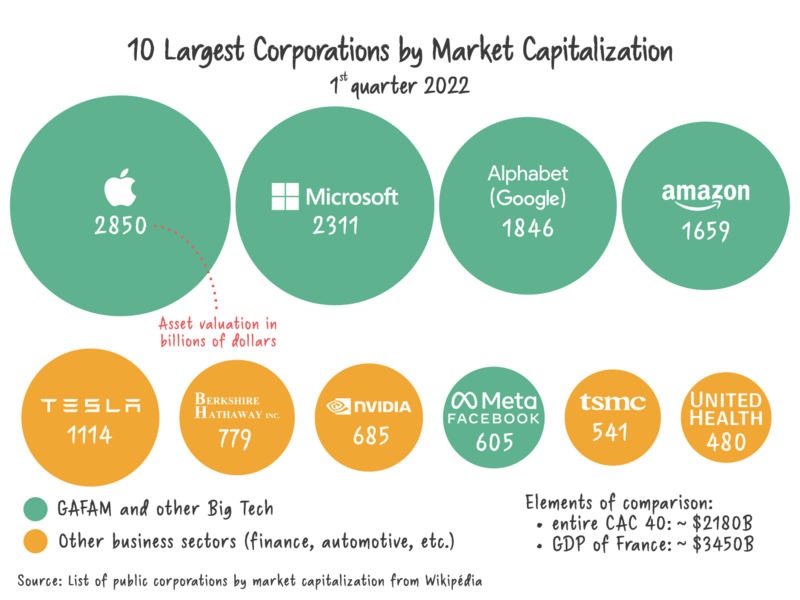
These advantages translated into a net worth that defied traditional valuation metrics. By 2021, Amazon’s market capitalization exceeded $1.7 trillion, making it the second-most valuable public company in the world—behind only Apple. Yet, its net income (a narrower metric) was often overshadowed by its free cash flow and investment in future growth.
Comparative Analysis
To contextualize what Amazon’s net worth in 2021 meant, it’s essential to compare it with peers in the tech and retail sectors:
| Company | 2021 Market Cap (Peak) | Revenue (2021) | Net Income (2021) |
|---|---|---|---|
| Amazon | $1.76 trillion | $469.8 billion | $33.36 billion |
| Apple | $2.75 trillion | $365.8 billion | $94.7 billion |
| Microsoft | $2.3 trillion | $198.3 billion | $58.2 billion |
| Alphabet (Google) | $1.8 trillion | $257.6 billion | $76.03 billion |
Key Takeaways:
- Amazon’s revenue surpassed Apple’s in 2021, making it the world’s largest retailer by sales.
- Despite its massive scale, Amazon’s net income was dwarfed by Apple’s due to its reinvestment-heavy model.
- AWS’s profitability (nearly 50% of Amazon’s operating income) made it a rare bright spot in an otherwise capital-intensive business.
- While Apple and Microsoft had higher profit margins, Amazon’s growth trajectory was unmatched in terms of market expansion.
Future Trends
Amazon’s 2021 net worth was not an endpoint but a springboard. By this time, the company was already laying the groundwork for its next phase of growth:
- Expansion into Healthcare: Amazon’s acquisition of One Medical (2021) signaled its entry into primary care, a sector ripe for disruption.
- Autonomous Delivery: Investments in drone and robotics technology hinted at a future where logistics are fully automated.
- Global E-Commerce Dominance: Aggressive expansion in India, Europe, and Latin America aimed to replicate its U.S. success.
- AI and Machine Learning: Amazon’s investments in AI (e.g., through AWS’s SageMaker) positioned it to lead in next-generation data analytics.
- Regulatory Scrutiny: Antitrust concerns in the U.S. and EU threatened to reshape Amazon’s business model, forcing it to adapt.
Analysts predicted that by 2025, Amazon’s net worth could surpass $2 trillion, driven by these strategic bets. However, the path forward was fraught with challenges—labor disputes, climate change pressures, and geopolitical tensions could all disrupt its trajectory.
Conclusion
When we ask what Amazon’s net worth in 2021 was, we’re really asking: What does it mean for a company to redefine an entire economy? The answer lies in the intersection of ambition, data, and relentless execution. Amazon didn’t just achieve a high net worth—it engineered one, using a playbook that prioritized long-term dominance over short-term gains. Its valuation wasn’t just a reflection of past successes but a promise of future control over logistics, cloud computing, and even healthcare.
Yet, the story of Amazon’s 2021 net worth is also a cautionary tale. The company’s rise has come at a cost: worker exploitation, environmental concerns, and market monopolization. As regulators and competitors circle, Amazon’s next chapter will test whether its financial empire can sustain its growth—or if the very forces that built it will be its undoing.
One thing is certain: the question “What is Amazon’s net worth in 2021?” will continue to resonate, not just as a financial metric, but as a mirror reflecting the broader tensions of the digital age.
Comprehensive FAQs
Q: How did Amazon’s net worth change from 2020 to 2021?
A: Amazon’s net worth surged in 2021 due to pandemic-driven e-commerce growth. Its market capitalization peaked at $1.76 trillion in 2021, up from $1.6 trillion in 2020. Revenue grew by 38% year-over-year, while AWS’s profitability remained robust despite increased competition.
Q: Was Amazon profitable in 2021?
A: Yes, but its profitability was complex. Amazon reported a net income of $33.36 billion in 2021, but its operating income was $38.9 billion. The discrepancy stems from heavy reinvestment in growth (e.g., warehouses, acquisitions). Critics argue its “working capital” strategy masks true profitability.
Q: How does Amazon’s net worth compare to other tech giants?
A: In 2021, Amazon’s market cap trailed only Apple ($2.75 trillion) but surpassed Microsoft ($2.3 trillion) and Alphabet ($1.8 trillion). However, Amazon’s revenue exceeded Apple’s, making it the world’s largest retailer. The key difference? Amazon prioritizes growth over margins.
Q: What was the biggest driver of Amazon’s net worth in 2021?
A: AWS (Amazon Web Services) was the single largest contributor. In 2021, AWS generated $62.2 billion in revenue and accounted for nearly 60% of Amazon’s operating profit. Its dominance in cloud computing ensured Amazon’s financial resilience even during retail slowdowns.
Q: Did Amazon’s net worth decline after 2021?
A: Yes, but temporarily. Post-2021, Amazon’s stock faced volatility due to macroeconomic factors (rising interest rates) and regulatory pressures. By 2023, its market cap dipped to $1.2 trillion, though its core business remained strong. The decline was more about market conditions than fundamental weakness.
Q: How does Amazon’s net worth affect consumers?
A: Amazon’s financial scale translates to lower prices, faster delivery, and a vast product selection for consumers. However, critics argue its dominance stifles competition, leading to fewer choices for sellers and workers. The trade-off? Convenience at the cost of market diversity.
Q: What acquisitions contributed most to Amazon’s 2021 net worth?
A: Key acquisitions included:
- Whole Foods (2017) – Expanded into grocery and physical retail.
- Zappos (2009) – Strengthened its footwear and apparel market.
- Ring (2020) – Entered the smart-home security market.
- One Medical (2021) – A major bet on healthcare.
